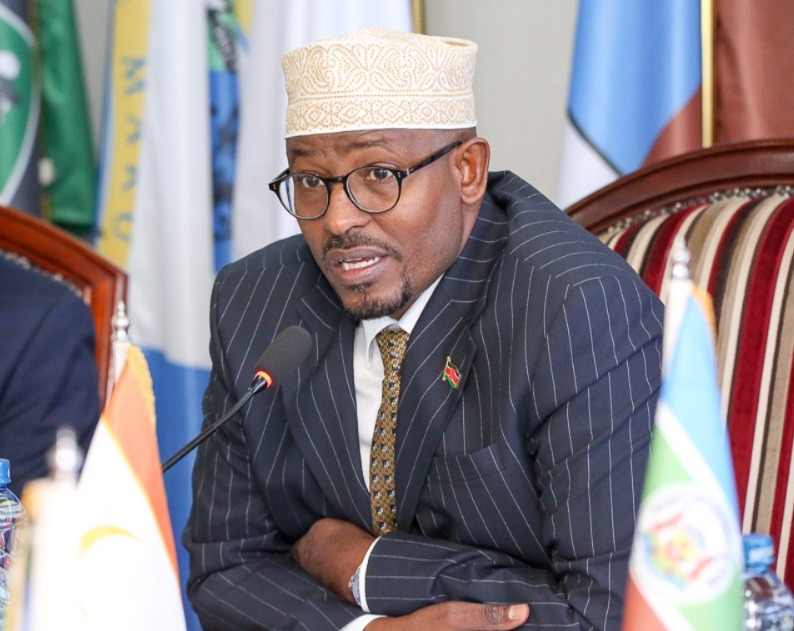
A coalition of 18 civil society organisations has sharply criticised the decision by the Council of Governors to stop appearing before the Senate County Public Accounts Committee, warning that the move threatens the country’s oversight system and weakens public finance accountability.
Speaking under the Okoa Uchumi Campaign and the National Integrity Alliance, the groups said the boycott raises serious concerns about respect for constitutional checks and balances at a time when scrutiny of county spending remains vital.
In a joint statement released on Monday, the organisations said the Council’s stand risks undermining the Senate’s oversight mandate over funds allocated to county governments. They pointed out that the Constitution clearly outlines the Senate’s role in supervising how national revenue shared with counties is used.
“The CoG's resolution to boycott appearances before CPAC signals a troubling trend, an attempt to evade constitutionally mandated accountability. Under Articles 96 and 125, respectively, the Senate has the authority to exercise oversight over national revenue allocated to county governments and to summon any person to appear before it,” the statement read.
The Council of Governors had earlier accused the Senate County Public Accounts Committee and the County Public Investments and Special Funds Committee of running political witch hunts, engaging in extortion and harassing governors. It also called for the reconstitution of the accounts committee.
However, the civil society groups maintained that refusing to honour Senate summons cannot be justified. They argued that even where there are claims of misconduct, the oversight process must continue as investigations take their course.
“This does not, however, mean that allegations of misconduct should be ignored. They must be independently investigated but cannot be used as a means to justify the avoidance of oversight, as in this instance,” the organisations added.
The coalition stressed that oversight and investigations should move side by side without stopping accountability processes. In their view, halting appearances before the Senate sends the wrong message at a time when concerns about the use of public funds remain high.
The groups also referred to repeated warnings from the Office of the Auditor General about misuse of public money and delays in completing audits. They said such weaknesses, both at national and county levels, continue to expose gaps in financial management and must not be worsened by political standoffs.
They further observed that the ongoing dispute has added to falling public trust in leadership. Recent youth-led civic actions, they noted, have shown growing frustration over lack of transparency and poor service delivery in many counties.
Among their proposals, the organisations urged the Council of Governors to formally submit its allegations to the Ethics and Anti Corruption Commission. At the same time, they called on the Senate to begin disciplinary steps to address the claims raised against its committees.
The coalition also asked the Office of the Director of Public Prosecutions to give priority to corruption and economic crimes that arise from audit findings and parliamentary oversight work. According to the groups, accountability institutions must act firmly to restore confidence in public systems.
They cautioned that failure by oversight and investigative bodies to act could push citizens to seek civic and court action to enforce Chapter Six of the Constitution, which deals with leadership and integrity.
The 18 organisations behind the statement are: The Institute for Social Accountability, Transparency International Kenya, Kenya Human Rights Commission, Inuka Kenya Ni Sisi, Mzalendo Trust, Katiba Institute, International Commission of Jurists Kenyan Section, National Taxpayers Association, Social Justice Center Working Group, Crawn Trust, EATGN, Econews Africa, Institute of Public Finance Kenya, Kenya Tuitakayo, Okoa Mombasa, Amnesty International Kenya, Bunge Mashinani Initiative, and Twaweza East Africa.
In their closing remarks, the groups said there must be a careful balance between examining claims of wrongdoing and ensuring that oversight continues without disruption. They warned that by staying away from the Senate committee, the Council of Governors risks creating a precedent that could weaken the authority of the Senate and reduce public confidence in county leadership.
By the time of publication, neither the Council of Governors nor the Senate committees had issued a response, leaving the impasse unresolved. Observers say the direction this dispute takes could influence the future of accountability and civic oversight in Kenya, especially in how resources are managed across the 47 counties.




























Comments
Sign in with Google to comment, reply, and like comments.
Continue with Google